MyGLP1Protein

Plant vs whey protein on a GLP-1, and the leucine gap that matters

Quick answer

Whey protein is higher in leucine, the amino acid that switches on muscle building, which makes it the first choice for preserving muscle during rapid GLP-1 weight loss. But if you are dairy-sensitive or whey upsets your already-slow gut, a plant blend is the right call, and it works well with one adjustment. Plant protein contains roughly 30 percent less leucine than whey, so aim 10 to 15 percent higher on your total daily grams to close the gap, or add a leucine supplement. Choose a complete blend such as Orgain Organic ($31.52), which combines pea and brown rice so the amino acid profile is more balanced than a single source, or a clean single-ingredient option like Naked Pea ($57.99). Avoid blends loaded with fiber and gums, since those worsen the bloating and constipation that often come with GLP-1 use.

Want your exact number? The calculator gives a personalized daily target and per-meal split.

Open the calculator

What the leucine gap actually means

Leucine is the trigger amino acid for muscle protein synthesis. Whey is rich in it, which is why it preserves muscle so effectively. Plant proteins carry less leucine gram for gram, so the same dose sends a slightly weaker muscle-building signal. The fix is simple math: eat a bit more total plant protein, or add leucine, and you reach the same threshold.

Blends beat single sources

Pea protein is high in some amino acids and low in others; rice protein is the mirror image. Combined, they form a more complete profile that better resembles animal protein. That is why a pea-and-rice blend like Orgain is a smarter default than a single-source powder if muscle preservation is the goal. A pure pea isolate like Naked Pea is excellent when you want the shortest possible ingredient list.

Watch the fiber and gums

Many plant powders add inulin, chicory root, or thickening gums for texture. On a GLP-1, where constipation and bloating are already common, that extra fiber can make symptoms worse. Read the label and favor blends that keep added fiber low.

How much higher to aim

If your calculator target is 110 grams on whey, set your plant target around 120 to 125 grams to account for the lower leucine. It is a small adjustment that keeps the muscle-preserving effect intact while letting you avoid dairy entirely.
Dairy-sensitive & GI

For dairy-sensitive users, these plant picks are the cleanest. Remember to aim 10–15% higher on total daily grams:

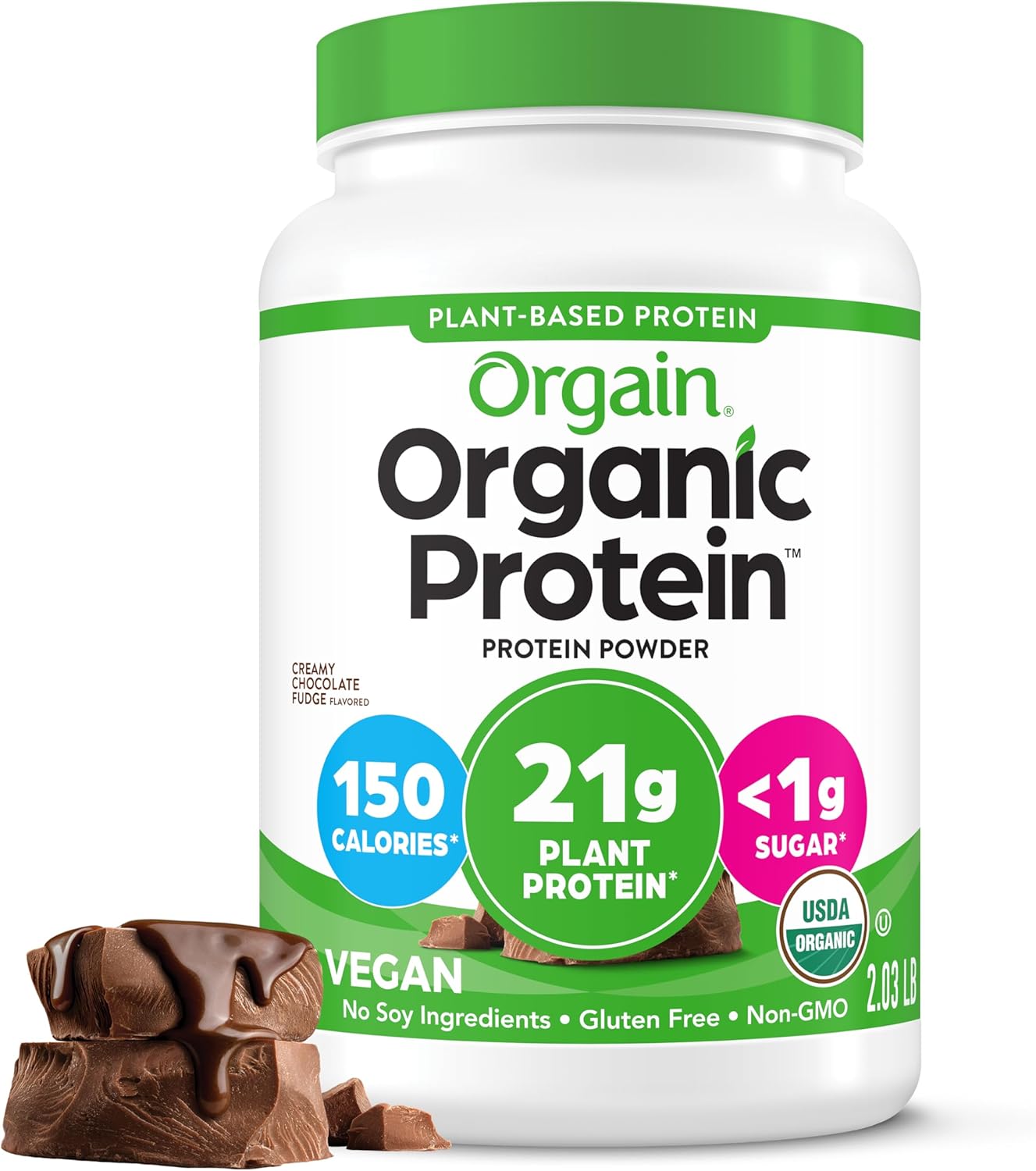
Orgain Organic Vegan Protein Powder

21g protein, pea + brown rice + chia blend

A complete plant blend (pea, brown rice, chia, mung bean) that is USDA organic and free of dairy and soy, the default for dairy-sensitive users.

Pros
  • + Complete plant blend with no dairy, soy, or gluten
  • + USDA organic, 21g protein per serving
  • + 30,000+ reviews, widely available
Cons
  • Plant protein has ~30% less leucine than whey, so aim 10–15% higher on total daily grams
  • Thicker, grittier texture than isolate
Check Price on Amazon
Naked Pea 100% Pea Protein Isolate
8.6/10

$57.99

27g protein, single ingredient, unflavored

One ingredient, pea protein isolate, and nothing else. The cleanest-label plant pick, with the highest protein-per-scoop in this cluster.

Pros
  • + Single-ingredient pea isolate: no soy, dairy, gluten, or additives
  • + 27g protein per serving, highest in the plant cluster
  • + Unflavored, blends into anything
Cons
  • Earthy, plain taste needs mixing into something
  • Lower leucine than whey, so pair with extra total grams or a leucine add
Check Price on Amazon

Frequently asked questions

Is plant protein as good as whey on a GLP-1?
Plant protein can be nearly as effective, but you have to account for its lower leucine content by eating about 10 to 15 percent more total grams, or by adding a leucine supplement. Whey remains the simplest choice for muscle preservation because it is naturally leucine-rich. Choose plant protein when you are dairy-sensitive or whey bothers your stomach, and pick a complete pea-and-rice blend rather than a single source so the amino acid profile is more balanced.
What is the best dairy-free protein for GLP-1 users?
A complete plant blend like Orgain Organic, which combines pea and brown rice for a balanced amino acid profile, is the best all-round dairy-free choice. If you prefer the shortest ingredient list, a single-ingredient option such as Naked Pea isolate delivers 27 grams per serving with nothing added. With either, aim 10 to 15 percent higher on your total daily protein to offset the lower leucine, and favor blends that keep added fiber and gums low to avoid worsening GLP-1 bloating.
Why does plant protein need to be eaten in higher amounts?
Because it contains less leucine, the amino acid that triggers muscle building, than whey does, roughly 30 percent less gram for gram. To send the same muscle-preserving signal during rapid weight loss, you make up the difference by eating about 10 to 15 percent more total plant protein, or by adding a small leucine supplement. This is a minor adjustment to your daily target and lets dairy-sensitive GLP-1 users protect muscle just as well as whey drinkers.

Related guides